 Skip to content
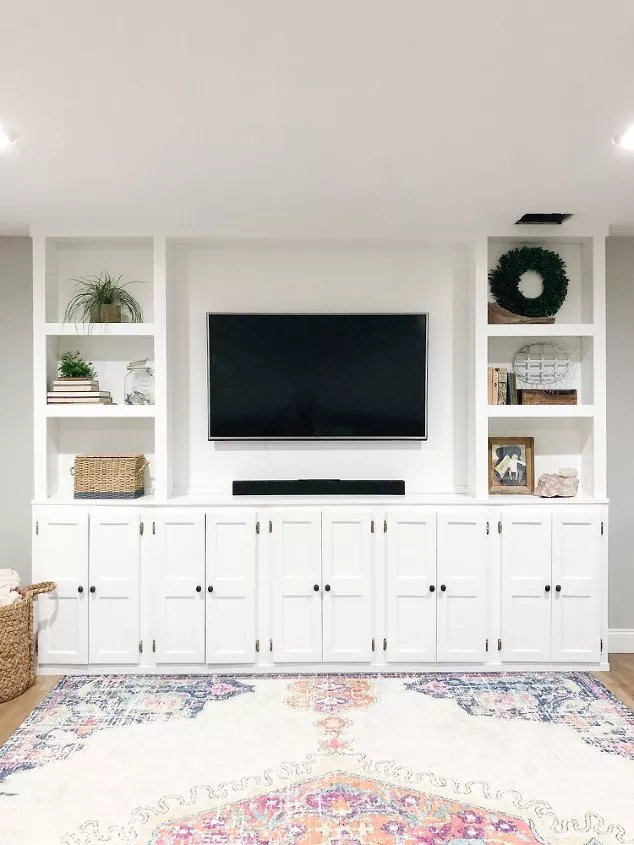
This is a fantastic and budget-friendly project. Building DIY TV built-ins using Facebook Marketplace cabinets is a popular approach because it saves significant money on custom millwork and allows for a truly custom fit.
Here’s a comprehensive guide to planning and executing this project, from sourcing to finishing.
Phase 1: Planning & Design
This is the most critical phase. Rushing here leads to costly mistakes.
-
Measure Your Space:
-
Width: Measure the entire wall width where the built-ins will go.
-
Height: Measure from floor to ceiling.
-
TV Size: Know the exact dimensions of your TV and its VESA mount pattern. Decide if you want the TV flush with the cabinet fronts or recessed.
-
Depth: Consider what you’ll store (media boxes, game consoles, books, decor). Standard cabinet depth is often 16-18″, which is usually perfect.
-
-
Create a Layout:
-
Sketch your design. Aim for a symmetrical look with the TV as the centerpiece.
-
Will you have a base row of cabinets with a long countertop and upper shelves? (Most common and beginner-friendly).
-
Or will you use full-height cabinets flanking the TV?
-
Leave a gap: Plan for a 1-2 inch gap between the sides of the TV and any adjacent cabinets or shelves for airflow and visual balance.
-
-
Calculate Your Cabinet Needs:
-
Based on your sketch, calculate how many base cabinets and upper cabinets you need.
-
Example: For a 10-foot wall with a 65″ TV, you might want:
-
Two 36″ wide base cabinets on either side (72″ total).
-
A open section in the middle for the TV (approx. 60″).
-
This leaves about 12″ of total space to fill with filler strips or custom boxes.
-
-
Phase 2: Sourcing on Facebook Marketplace
This is your treasure hunt. Be patient and persistent.
-
Search Terms: Use broad and specific terms: “kitchen cabinets,” “base cabinets,” “wall cabinets,” “vanity,” “cabinets lot,” “IKEA Sektion,” “IKEA Metod,” “white shaker cabinets.”
-
What to Look For:
-
Style: Try to find cabinets with a similar door style (e.g., Shaker) and finish. Painting can unify different styles, but similar lines help.
-
Condition: Solid boxes are more important than perfect doors. You can always paint, replace doors, or add new hardware.
-
Size: Look for cabinets in sizes that fit your design (e.g., 30″, 36″, 24″ wide). Standard heights are 34.5″ for base cabinets and 30″ or 42″ for uppers.
-
-
IKEA Cabinets are Gold: IKEA Sektion/Metod cabinets are excellent for this. They are modular, easy to assemble, and you can often find them sold in lots by people who changed their plans. You can also easily buy new doors, legs, and toe kicks from IKEA to complete the look.
-
Ask Questions: Confirm dimensions, check for water damage, and ask if all hardware and doors are included.
Phase 3: The Build Process
Tools & Materials You’ll Likely Need:
-
Level (4-ft level is crucial)
-
Stud finder
-
Drill/Driver
-
Circular Saw or Table Saw (for cutting filler strips & countertop)
-
Kreg Jig (Pocket Hole Jig) – Highly recommended
-
Wood Screws (2.5″, 1.25″)
-
Plywood or MDF (for filler strips, shelving, and connecting cleats)
-
Construction Adhesive (Liquid Nails)
-
Finish Nailer (18-gauge)
-
Shims
Step-by-Step Assembly:
-
Prep the Area: Remove baseboards and outlet covers. Identify and mark all wall studs.
-
Build a Strong Base:
-
If your base cabinets don’t have built-in toe kicks, you’ll need to build a platform for them to sit on using 2x4s or plywood. This ensures they are all level and at the correct height.
-
Crucial: Use shims to make sure this base is perfectly level in all directions. Nothing will work if the base isn’t level.
-
-
Assemble and Place Cabinets:
-
Remove all doors and drawers to make them lighter.
-
Place the cabinets on your level base. Clamp them together at the face frames.
-
Connect the Cabinets: Drill pocket holes on the inside of the face frames to screw the cabinets together, creating one solid unit.
-
-
Secure to the Wall:
-
Locate the wall studs behind the cabinets.
-
Drill screws through the cabinet hanging rails (or a sturdy back corner) directly into the wall studs. This prevents tipping and adds stability.
-
-
Fill the Gaps:
-
You will almost certainly have gaps on the sides or between cabinets and the TV space. This is normal!
-
Cut filler strips from plywood or MDF to fill these gaps. Attach them securely with wood glue and finish nails.
-
-
Add the Countertop:
-
A simple and effective option is a butcher block countertop from a home center (e.g., IKEA, Home Depot), cut to size.
-
Secure it to the base cabinets from the inside using brackets to allow for wood movement.
-
-
Build the Upper Structure:
-
This can be open shelving or more wall cabinets.
-
For shelves, use plywood/MDF and support them with sturdy brackets or by building a simple box frame attached to the base and the wall.
-
-
Install the TV:
-
The best method is to mount the TV to the wall itself, directly into the studs, not to the cabinets or the shelving behind it. This is non-negotiable for safety and stability.
-
Carefully measure and cut a hole in the back of the upper shelving for the TV mount arm and cables to pass through.
-
Phase 4: The Magic of Finishing
This is what makes it look built-in and expensive.
-
Calking: Caulk every single seam—where the cabinets meet the wall, the ceiling, and each other. This creates a seamless, painted-on look.
-
Priming and Painting:
-
Sand all surfaces, especially if they are laminate. Use a deglosser for a better bond.
-
Use a high-adhesion primer like Zinsser BIN (shellac-based) or Stix.
-
Apply a durable paint—semi-gloss or satin are good choices for durability. Use a paint sprayer for a factory-like finish or a high-quality roller for a smooth look.
-
-
Add Trim & Molding:
-
Install crown molding at the top where the unit meets the ceiling.
-
Add baseboard trim at the bottom to match the rest of the room.
-
Use 1×2″ or 1×3″ boards to create a face frame on any open shelving, giving it a more furniture-like appearance.
-
-
Install Lighting: Add LED strip lights (e.g., Philips Hue Gradient or basic LED strips) under the upper shelves or inside the cabinets for a high-end, ambient effect.
-
Style: Add hardware (knobs/pulls), style with books, decor, and baskets to hide clutter.
By patiently sourcing cabinets and meticulously finishing the project, you can create a stunning, custom-looking built-in for a fraction of the cost. Good luck
