 Skip to content
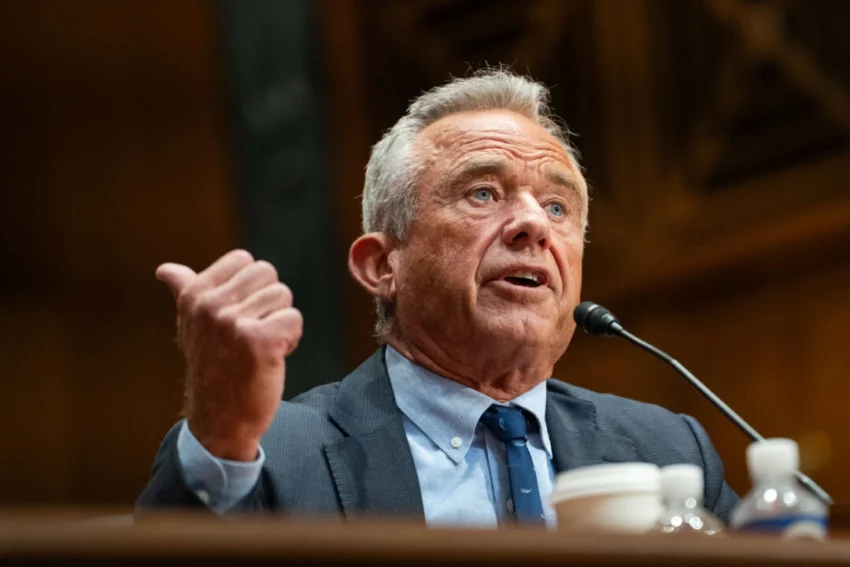
Among the new efforts outlined by officials in the 20-page “Make Our Children Healthy Again” report are plans to review and update guidance and regulations for food served at hospitals, the launch of a new vaccine injury research program at the National Institutes of Health (NIH) Clinical Center in Maryland, the removal of restrictions on selling whole milk in schools, updating labeling for the opioid OxyContin to warn about the dangers of repeated use, and the start of a campaign aimed at boosting the health and fertility of young men and women who want to have children.
“Today’s report outlines a bold framework to improve children’s health,” Vince Haley, director of the White House Domestic Policy Council, and executive director of the commission, said during a briefing in Washington.
Health Secretary Robert F. Kennedy Jr., the commission’s chair, said: “I’m grateful that a lot of these 128 recommendations are things that I’ve been dreaming about my whole life.”
At the end, it included one page containing 10 recommendations, such as launching new clinical trials on nutrition, supporting studies on long-term outcomes of drugs that are commonly prescribed to children, and improving safety surveillance of vaccines and other drugs.
Trump directed the commission to publish a strategy to address the factors.
The new report, which was submitted to the White House in August, says that the Department of Health and Human Services (HHS), divisions of the department such as the NIH, and other agencies will work together to improve Americans’ health.
The NIH is going to investigate injuries from vaccines with better data collection and analysis, including through a new research program focusing on vaccine injuries that will start at the Clinical Center and “may expand to centers around the country,” the report states. The White House and HHS are planning to develop a framework that will ensure America has “the best childhood vaccine schedule,” address vaccine injuries, and modernize vaccines in the country.
The NIH is also going to launch a new initiative on chronic diseases that will “generate actionable results for diseases arising in childhood and adulthood,” while the Environmental Protection Agency will work with several other agencies to study the impact of cumulative exposure to chemicals, including pesticides, according to the report.
- A working group to evaluate prescription patterns for drugs such as antidepressants for children.
- The Food and Drug Administration working to improve the rates of breastfeeding.
- A new system that will track payments to researchers from companies, similar to an existing government database for payments from companies to doctors.
- Better regulation for sunscreens.
- Revamp communication to parents about how the environment can impact children’s health, including through storytelling.
- A new campaign to educate the public on a pending update to America’s dietary guidelines, with an emphasis on whole foods such as fruits and vegetables.
- New initiatives from the surgeon general to raise awareness on how screens, alcohol, and drugs impact children.
- The updating of labeling for OxyContin “to warn patients and consumers about the dangers of chronic use.”
- A new campaign to improve the fertility of young people, including through training clinics to identify and treat underlying causes of infertility.
Previously announced projects, such as one focusing on the causes of autism, are also included in the strategy document.
MAHA Action, which was established to support the government in implementing MAHA initiatives, praised the report.
Zen Honeycutt, the founder of Moms Across America, said in an emailed statement that the group was supportive of much of the report, but was disappointed it did not target specific chemicals used in agriculture such as glyphosate.
“We would rather that this MAHA Commission report had put the health and safety of our children first and made a bold commitment to reduce our children’s exposure to thousands of harmful pesticides, many of which are banned in other countries,” she said.
