 Skip to content
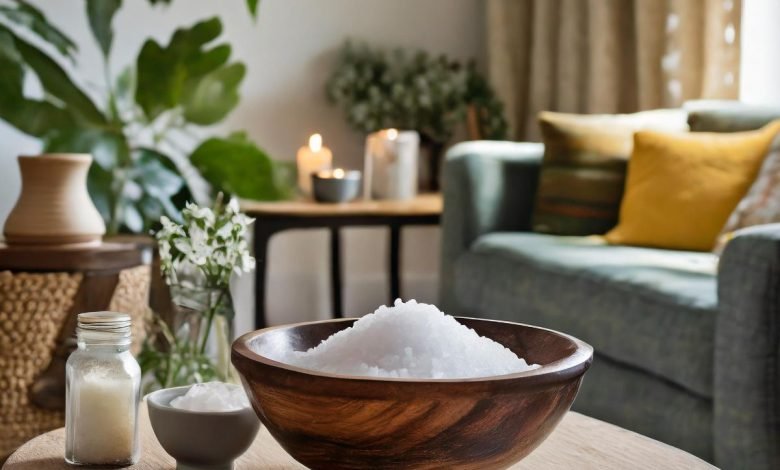
This is a popular home tip that circulates frequently, and it’s based on a mix of science and folklore.
Here’s a breakdown of the claimed extraordinary effect, the science behind it, and what you realistically can expect.
Table of Contents
ToggleThe Claimed Extraordinary Effect
The tip suggests that by setting an open bowl of Epsom salt (magnesium sulfate) in your living room (or any room), you will experience two primary benefits:
-
Air Purification: It is said to “pull toxins” and impurities from the air.
-
Humidity Control: It is claimed to act as a natural dehumidifier, absorbing excess moisture from the room’s air.
The Reality and The Science
Let’s separate the plausible from the exaggerated:
1. On “Pulling Toxins” and Purifying Air:
-
The Verdict: Largely Mythical.
-
The Science: Epsom salt is a hygroscopic material, meaning it attracts and holds water molecules from its surrounding environment. It is excellent at pulling water from the air.
-
However, the idea that it actively pulls volatile organic compounds (VOCs), allergens, or other “toxins” from the air on a meaningful scale is not supported by scientific evidence. For true air purification, devices with HEPA filters (for particles) and activated carbon filters (for gases and odors) are vastly more effective.
2. On Humidity Control (Dehumidifying):
-
The Verdict: Minimally Effective.
-
The Science: Because it is hygroscopic, a bowl of Epsom salt will absorb some moisture from the air. However, its capacity is extremely limited compared to a dedicated electric dehumidifier.
-
A single bowl might slightly reduce humidity directly immediately around the bowl, but it will do very little to change the humidity level of an entire living room. The salt will eventually become damp and dissolve. For a small, enclosed space like a closet or cabinet, it can be a modest, short-term helper.
The Real Extraordinary Effect: Aromatherapy & Ambiance
Where this trick shines is not in hard science, but in sensory experience. This is how you can make it truly effective and enjoyable:
1. Create a Natural, Customizable Air Freshener:
This is the most legitimate and pleasant use for a bowl of Epsom salt.
-
How to: Take a wide, open bowl. Fill it with Epsom salt. Add 10-15 drops of your favorite essential oils (e.g., lavender for relaxation, citrus for energy, eucalyptus for clarity). Mix it well.
-
The Effect: The hygroscopic nature of the salt helps to slowly diffuse the essential oils into the air, acting as a natural, passive scent diffuser. The salt absorbs the oils and then releases the fragrance over time. It’s a beautiful, chemical-free way to make a room smell wonderful.
2. Serve as a Decorative Element:
A beautifully crafted bowl of white or scented Epsom salt can be a simple, elegant, and natural piece of decor.
How to Do It Properly (For Scent Diffusion)
If you want to try it, here’s the best method:
-
Choose a Bowl: Select a wide, shallow, decorative bowl with a large surface area. This allows for more evaporation and scent dispersal.
-
Fill It Up: Pour Epsom salt into the bowl, filling it about halfway.
-
Add Essential Oils: Add 10-15 drops of your preferred essential oil(s). Use a spoon or your fingers to mix it thoroughly, ensuring the oil is distributed and not pooled.
-
Place It: Set the bowl on a coffee table, shelf, or side table in your living room.
-
Refresh: Every week or so, you can stir the salt and add a few more drops of oil to refresh the scent. Eventually, the salt will clump from humidity; when it loses its effectiveness, you can compost it or discard it.
In summary: While setting out a bowl of plain Epsom salt won’t purify your air or significantly dehumidify your living room, using it as a base for essential oils creates a natural, lovely, and long-lasting air freshener that provides a genuine calming or invigorating effect.
