 Skip to content
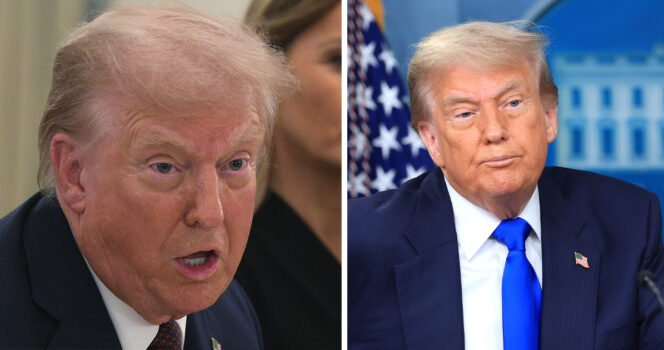
Trump Warns Pentagon Rebrand Will Make US a “Laughingstock”
This statement from former President Donald Trump typically centers on his strong opposition to progressive changes within the U.S. military, which he and his allies often frame as a “woke” rebrand that undermines military strength and tradition.
What Specifically Sparked This Warning?
While Trump has made broad statements against a “woke” military, his specific warning about the U.S. becoming a “laughingstock” is most famously tied to his vehement opposition to the renaming of U.S. military bases that were originally named after Confederate generals.
-
The Issue: Ten U.S. Army installations, such as Fort Bragg (NC) and Fort Hood (TX), were named after Confederate officers who fought against the United States in the Civil War.
-
The Change: Following the nationwide social justice movements in 2020, a bipartisan consensus emerged that these names were inappropriate and painful for many service members, particularly African Americans. The National Defense Authorization Act (NDAA) for Fiscal Year 2021 created a commission to rename these bases and remove other Confederate symbols from military property.
-
Trump’s Stance: He fiercely opposed this move. In 2020, he threatened to veto the entire defense bill over this provision, calling it a “politically motivated” attempt to “wash away history” and claiming it would disrespect our heritage. His argument was that changing these long-standing names would make the country look weak and be mocked by adversaries.
Broader Context of the “Woke Military” Critique
Trump’s warning about becoming a “laughingstock” is part of a larger narrative he promotes, which includes opposition to:
-
Diversity, Equity, and Inclusion (DEI) Initiatives: Criticizing Pentagon programs aimed at promoting diversity and countering extremism within the ranks as wasteful and divisive.
-
Climate Change Policies: Opposing the Pentagon’s focus on climate change as a national security threat, viewing it as a distraction from its core mission.
-
Transgender Service Members: His administration initially banned transgender individuals from serving, a policy later reversed by the Biden administration. He frames inclusive policies as detrimental to unit cohesion and combat readiness.
The Other Side of the Argument
Proponents of these changes argue:
-
Readiness and Cohesion: A military that is inclusive and where all service members feel respected is a more cohesive and effective fighting force.
-
Strategic Reflection: Adversaries like Russia and China are not deterred by base names but by military might and the unity of the nation and its allies. They argue that modernizing the military’s culture to reflect American values is a strength, not a weakness.
-
Honoring True Heroes: Renaming bases after Medal of Honor recipients and other heroic figures (e.g., Fort Bragg became Fort Liberty, Fort Hood became Fort Cavazos) is a more appropriate way to honor military heritage.
Key Takeaway
Trump’s statement is a potent political soundbite that taps into a broader cultural debate:
-
One perspective sees modernization and inclusivity as essential for a 21st-century military.
-
The other perspective views these changes as a politicized distraction that undermines tradition and projects weakness.
The warning that the U.S. will become a “laughingstock” is a definitive part of Trump’s rhetoric, framing these internal policy changes as a national security vulnerability and a source of international ridicule.
