 Skip to content
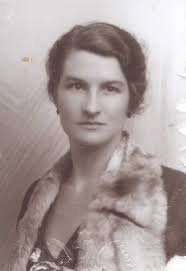
Here is an engaging and detailed account of Virginia Hall, the one-legged spy who became one of World War II’s most formidable and elusive agents.
Virginia Hall: The One-Legged Spy Who Outsmarted The Nazis
In the shadowy world of World War II espionage, where physical perfection was often prized, one of the Allies’ most effective and feared agents was a woman with a wooden leg. Virginia Hall, an American socialite turned master spy, didn’t just operate behind enemy lines; she became a legend, a ghost who orchestrated chaos under the noses of the Gestapo, who dubbed her “the most dangerous of all Allied spies.”
A Setback Becomes a Secret Weapon
Virginia Hall’s journey to becoming a spy was unconventional. Born in Baltimore in 1906, she was well-educated, ambitious, and dreamed of a career in the foreign service. A tragic hunting accident in Turkey in 1933 resulted in the amputation of her left leg below the knee. She fitted herself with a prosthetic leg she affectionately named “Cuthbert.”
This injury shattered her diplomatic career ambitions, but it did not break her spirit. When World War II erupted, Hall was driving an ambulance in France. After the fall of France in 1940, she made her way to London, where her determination and fluency in French and German caught the attention of Britain’s newly formed Special Operations Executive (SOE). The SOE’s mission was to “set Europe ablaze” through sabotage and supporting resistance networks. They saw in Hall not a disability, but an unparalleled resolve.
The “Limping Lady” of Vichy France
In August 1941, Hall was deployed to Vichy France, the zone nominally controlled by a puppet government collaborating with the Nazis. Posing as a stringer for the New York Post, she established a base in the city of Lyon.
Her work was monumental. Under the codename “Marie Monin” and later “Germaine”, she became the linchpin of the early French Resistance. For over 15 months, she:
-
Built Spy Networks: She single-handedly recruited and managed a vast network of agents, including resistance fighters, farmers, and prostitutes.
-
Organized Safe Houses: Her apartment became a crucial waystation for downed Allied airmen and escaped POWs on the “Pat O’Leary” escape line.
-
Facilitated Supplies: She coordinated the first wireless communications with London and arranged parachute drops of weapons, money, and supplies for the Maquis (French resistance fighters).
-
Mastered Disguise: She used her journalistic cover to travel freely, observing German troop movements and fortifications.
Her limp was her most identifiable feature, earning her the nickname “the Limping Lady” among the Resistance. To the Gestapo, it was the key clue in their frantic search for the elusive operative causing so much damage.
A Narrow Escape and a Shift in Allegiance
By November 1942, the Gestapo was closing in. The Nazis had occupied all of France, and the hunt for the Limping Lady intensified. Knowing her time was short, Hall made a daring escape over the Pyrenees Mountains into neutral Spain—a grueling, freezing journey on foot that would have been challenging for anyone, let alone an amputee. When she radioed London about the difficult trek, she famously quipped, “Cuthbert is giving me trouble.” The reply from an unknowing officer was, “If Cuthbert is troublesome, eliminate him.” Hall pressed on.
Her escape from France was so notorious that the Gestapo circulated wanted posters with her description, considering her “the most dangerous of all Allied spies.” They were certain they had driven her from the game.
They were wrong.
After a brief period, the American Office of Strategic Services (OSS), the forerunner to the CIA, recruited her. The OSS was initially hesitant—their manual stated that agents should have “all four limbs”—but Hall’s record was undeniable. In 1944, she was back in France, this time in the Haute-Loire region, ahead of the D-Day invasions.
Return to France: The “Dirty Old Woman” and the Harvest of Chaos
Dropped by a British torpedo boat onto a remote beach, Hall now posed as an elderly French milkmaid. She dyed her hair grey, wore worn-out clothes, and adopted a shuffling gait to conceal her limp. Her new codename was “Diane.”
From her rustic cover, she orchestrated a campaign of sabotage that crippled German efforts. Her three-man Jedburgh team and Maquis units:
-
Derailed freight trains.
-
Destroyed bridges and telephone lines.
-
Ambushed German patrols.
-
Provided critical intelligence on German troop positions.
Most importantly, her work ensured that after D-Day, German reinforcements were severely delayed, playing a vital role in the success of the Allied invasion. In a matter of weeks, her small army of Maquis grew from a few hundred to over 3,000 fighters, tying down thousands of German troops.
A Quiet Heroine’s Legacy
After the war, Virginia Hall received the Distinguished Service Cross from General William “Wild Bill” Donovan, the head of the OSS—the only civilian woman to be so honored in World War II. She also received an MBE from the British.
Unlike many of her contemporaries, Hall shunned the spotlight. She continued to work for the CIA after its formation until her mandatory retirement in 1966, always preferring the shadows to the limelight. She passed away in 1982.
Virginia Hall’s story is a testament to the fact that true strength lies not in the body, but in the will. She turned what others saw as a profound weakness into a component of her legend, outsmarting the Nazi regime through sheer courage, intellect, and an indomitable spirit. She remains one of the greatest spies in the history of modern warfare.
