 Skip to content
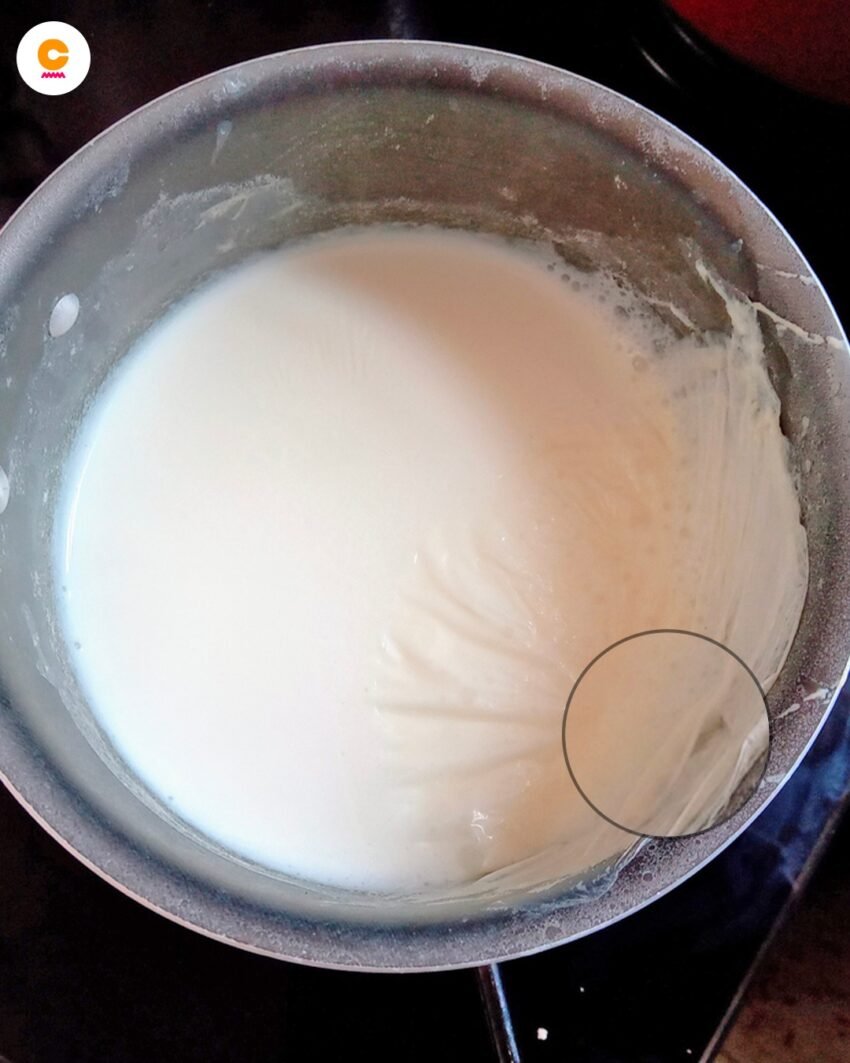
The skin that forms on heated milk is a result of the proteins and fats in the milk interacting as it heats up. Here’s a breakdown of what’s happening:
- Proteins Coagulate: Milk contains proteins, mainly casein and whey proteins. When milk is heated, the proteins begin to denature (unfold) and bond together. These proteins start to form a thin film on the surface of the milk, which is what we see as the “skin.” This process is more pronounced when the milk is heated slowly or at higher temperatures.
- Evaporation of Water: As milk heats, some of the water in the milk evaporates. This causes the milk to become more concentrated at the surface, which contributes to the formation of the skin. The proteins, fats, and sugars at the surface form a solid layer as the moisture evaporates.
- Fat Separation: Milk contains fat, and as the milk heats, the fat may rise to the top. When combined with the proteins and concentrated sugars near the surface, the fat helps form a film on top of the milk.
The skin can form more quickly when milk is heated too quickly or when it reaches a high temperature, and it’s often seen in milk that’s simmered or boiled.
How to Prevent Milk Skin:
- Stir frequently: Stirring the milk regularly while heating prevents the proteins and fats from clumping together and forming a skin.
- Use low to medium heat: Heating milk slowly on a lower heat can prevent the skin from forming and help maintain a smooth texture.
In some recipes (like puddings or custards), the skin is actually a desired outcome, but in other cases, it can be avoided with careful heating.
