 Skip to content
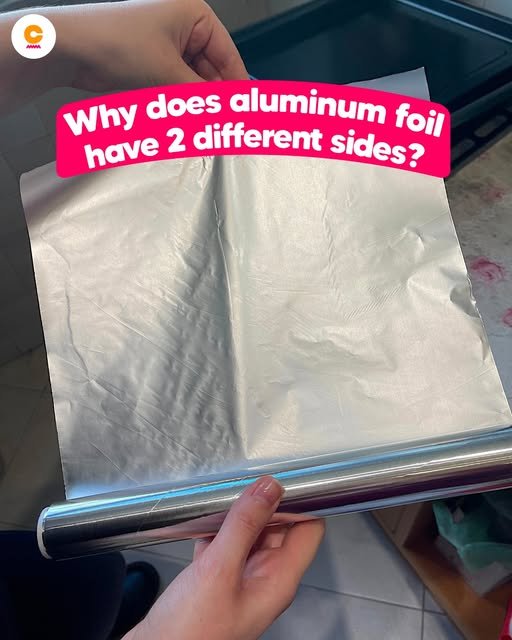
Aluminum foil has two different sides—one shiny and one dull—due to the manufacturing process, but the difference in appearance doesn’t affect its performance. Here’s why:
Why Aluminum Foil Has Two Different Sides:
- Manufacturing Process:
- Aluminum foil is made by rolling large sheets of aluminum multiple times until they reach the desired thickness.
- During the final rolling stages, two layers of foil are rolled together to prevent tearing and achieve the thinness required.
- The side that comes into contact with the highly polished steel rollers becomes shiny, while the other side, which faces another layer of foil, remains dull.
- No Functional Difference:
- Despite the visual difference, both sides of the foil perform the same way in terms of heat conduction, insulation, and cooking.
- The shiny side reflects slightly more light, but this has no significant impact on cooking or baking.
Common Misconceptions:
- Some people believe the shiny side should face outward to reflect heat, while others think the dull side should face outward to absorb heat. However, the difference in heat reflection or absorption is negligible in most cooking scenarios.
When It Might Matter:
- Non-Stick Properties: Some non-stick aluminum foils have a special coating on one side. In this case, the manufacturer will specify which side should face the food.
- Aesthetic Use: For decorative purposes (e.g., wrapping gifts or lining trays), you might prefer the shiny side to face outward for a more polished look.
In summary, the two sides of aluminum foil are a result of the manufacturing process, and for most practical uses, either side can be used without affecting the outcome. Always check the packaging if you’re using specialty foil with a non-stick coating.
